Philip Monte Verde LCSW
I found out my boyfriend cheated on me. While we are trying to work it out, we are actually having more sex than usual. Why do I crave affection from the very person who's hurting me?
The Paradox
Normally it would make sense to seek distance from someone who is hurting you. There is great biological drive behind this. You see a threat, and you seek to either fight it off or escape it. This is simple enough when a threat is only a threat, but not when a threat is also your source of emotional safety.
When a person occupies both roles, you may find you both want to push them away and draw them close. It is natural to want comfort from the person you are closest to when in pain. If your partner is the one delivering the pain, then they can bring two things: cessation of pain and the comfort of loving support.
Think of couples who just got back together after an extended fight or breakup. The ‘makeup sex’ is famously one of the most passionate kinds. Not only is there the pleasure of intimate touch and emotional connection, there is also the relief of no longer being against each other.
The Distress- Relief Cycle
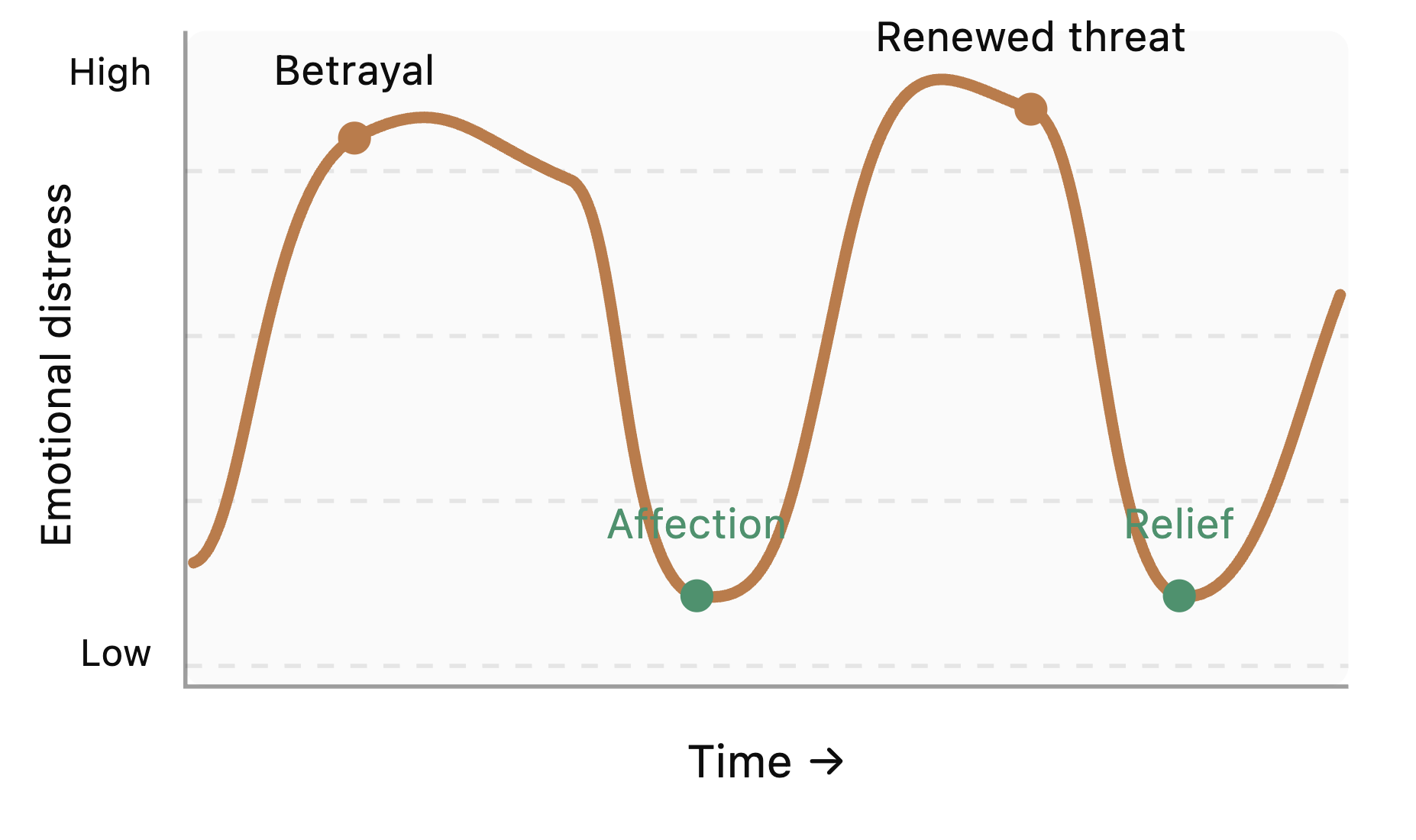
Conceptual illustration of the distress–relief cycle.
When you are in conflict with anyone, stress chemicals like adrenaline and cortisol can be released into your brain and body. This can cause you to tense up, become hypervigilant and combative. This is exhausting, especially the longer it goes on.
When a partner soothes you and stress recedes, bonding and reward chemicals like oxytocin and dopamine can be released. This can feel especially powerful when it was your partner that hurt you, as the body feels ‘oh what a relief, the pain is finally over’.
But unless your relationship issues get resolved alongside these moments of affection, the cycle is likely to repeat itself.
In Love More With What They Do To You Than With Them
In these situations you are experiencing both positive and negative reinforcement.
Positive: the pleasure your boyfriend is giving you in the form of affection and connection
Negative: the unpleasant feelings are removed: anxiety and uncertainty
When these reinforcements occur unpredictably, you can find yourself preoccupied with seeking them out. As if you can only feel comfortable in the relationship when the reinforcements come.
Trauma Bonding
Not every example of this is trauma bonding, so the term should not be thrown around lightly. But in abusive relationships where there is an imbalance of power and repeated mistreatment is interspersed with positive and negative reinforcement, it can ‘bond’ a person closer to their abuser through increased emotional attachment.
Recognizing the Difference Between Relief and Love
So how do you feel about the relationship as a whole? Besides how your partner makes you feel, what do you like about them? Do you feel the relationship is becoming healthier, or are you becoming more attached? Between moments of affection, how do you feel about the relationship? Would these moments feel as wonderful if they weren't preceded by so much pain?
Attachment to a person can grow without a relationship being healthy or truly loving. You may feel that you need them more than you want them.
—
Individual therapy can help you better understand your emotional attachment to a partner, recognize patterns of emotional abuse, and distinguish between temporary relief and meaningful changes in your relationship.
Therapy services are available in Rochester, NY, and online in New York, Colorado, Utah, and Virginia.
